Mammoth Hot Springs was added to Your Favorites!
Yellowstone NP, Wyoming
Claim this place to tell your story your way.
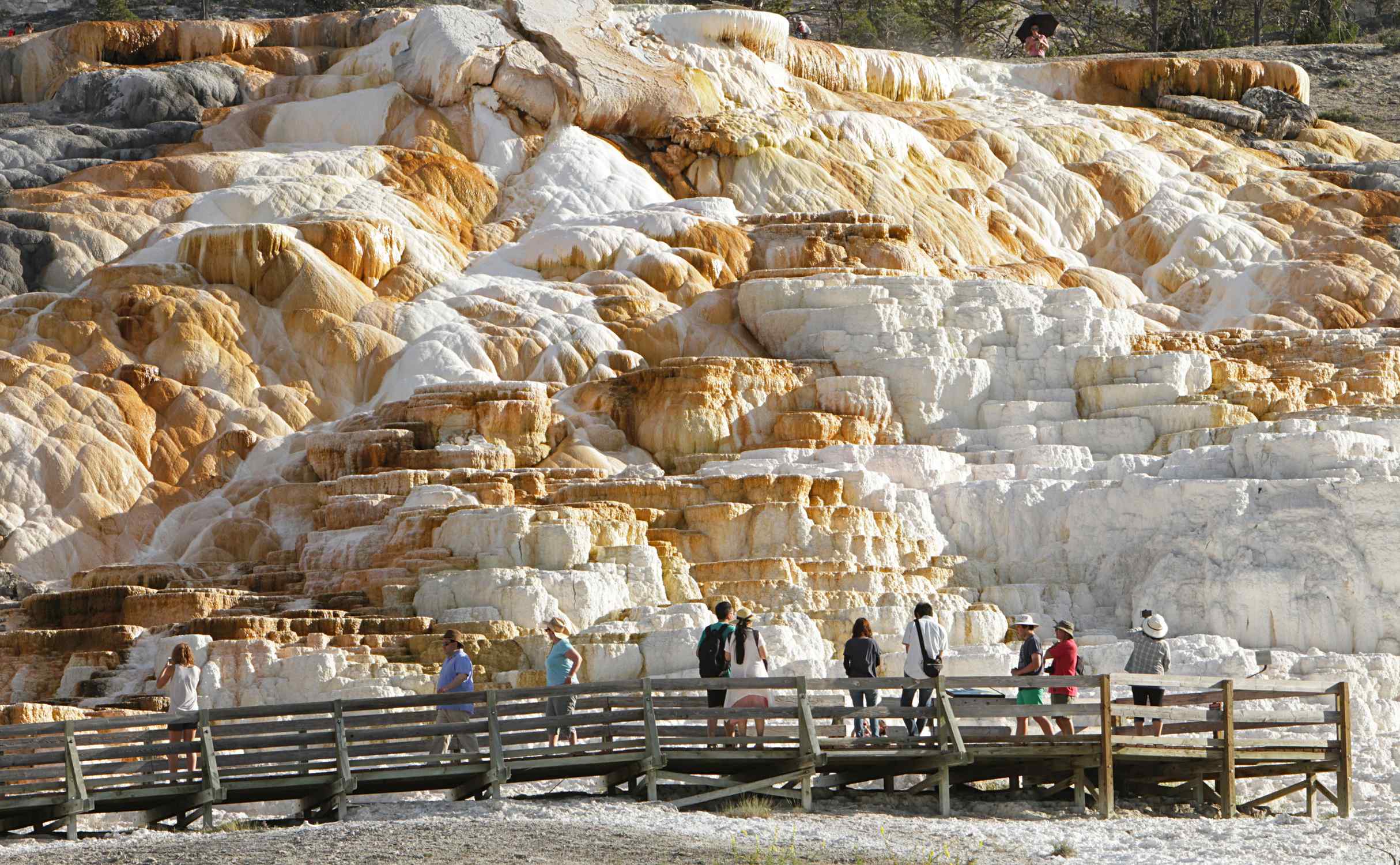
The travertine terraces at Mammoth Hot Springs are formed by the precipitation of calcium carbonate, and they can change shape and color due to the varying flow of hot water and the presence of different microorganisms.
Unlike other geothermal features in Yellowstone, Mammoth Hot Springs is formed from limestone, which is more soluble in the hot water, creating unique terraces.
Elk and bison are commonly seen in the area, often grazing near the hot springs, providing visitors with a chance to observe these majestic animals up close.
The name 'Mammoth' was inspired by the large size of the hot springs and the extensive terraces that resemble the massive structures of mammoth bones.
The area was once a military post, Fort Yellowstone, established in 1886 to protect the park from poachers and vandals, and many of the original buildings still stand today.
The vibrant colors of the terraces are due to thermophilic bacteria and algae that thrive in the hot water, each species contributing different hues based on the temperature and mineral content.
Unlike many other parts of Yellowstone, the roads to Mammoth Hot Springs are kept open throughout the winter, allowing visitors to experience its beauty in all seasons.